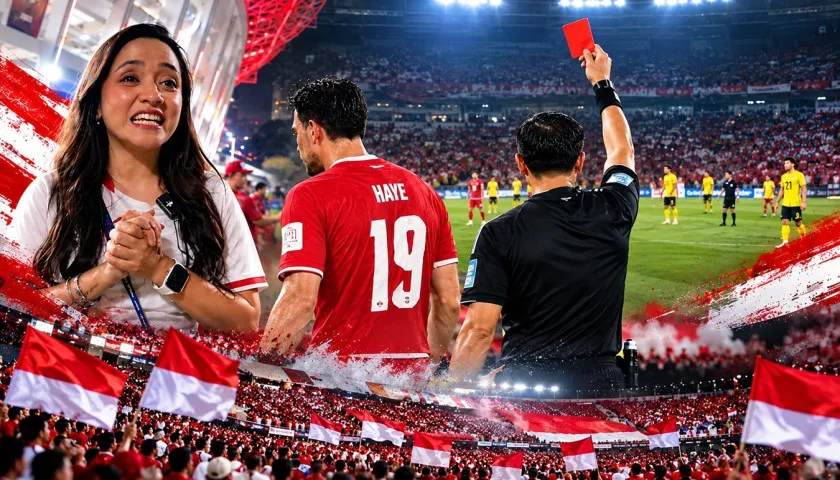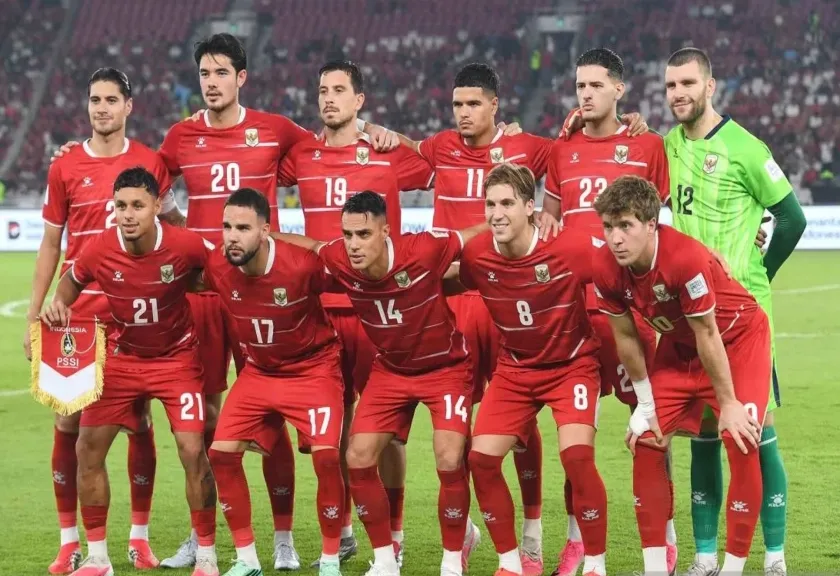

The 0-0 result for the National Team in the Indonesia vs Malaysia fixture at the FIFA ASEAN Cup 2026 is not only remembered for Thom Haye's red card. This match also offered a compelling insight into how John Herdman is working to shape Indonesia's playing style.
This second Group A match was hosted at Gelora Bung Karno Main Stadium (SUGBK), Jakarta, on Monday 28 September 2026 evening WIB. Indonesia were reduced to 10 men from the 37th minute following Thom Haye's dismissal, yet still successfully held Malaysia to a goalless draw.
Even before the sending off, there was a notable early phase that revealed clues about Herdman's game plan.
READ ALSO
10-Man Indonesia National Team Held Malaysia to a 0-0 Draw, Maarten Paes Became the Saviour
John Herdman is urged to learn lessons from the AFF Cup, with the target of winning the 2026 FIFA ASEAN Cup as champion.
Indonesia Held Malaysia to a Draw, Herdman Names Thom Haye's Red Card as a Key Moment
Analysing Herdman's Tactics Before The Red Card
Indonesia lined up in a base 5-4-1 formation, with Thom Haye and Joey Pelupessy operating in central midfield. During certain phases of play however, Thom pushed higher up the pitch to position himself close to Ole Romeny. He looked to occupy the space behind the striker while acting as the connecting link between midfield and the forward line.
It remains unconfirmed if this was a deliberate experimental tactic from Herdman. As such, this adjusted positioning is best interpreted as an observed tactical adjustment, rather than a confirmed permanent system change.
Indonesia showed early positive signs. Justin Hubner found the net in the 3rd minute, only for the goal to be ruled out for offside in the build-up. By the 10th minute, Indonesia had begun to assert greater possession control and build structured attacking moves.
Around the 30 minute mark however, Malaysia started to neutralise Indonesia's pressure, and the match returned to an even balance.
This raised a key tactical question: was Herdman beginning to settle on a new playing pattern, or was Indonesia simply struggling to sustain pressure once the opposition adapted to their approach?
This match analysis was featured on Itsme Podcast, with guest speakers football analysts Erwin Fitriansyah and Firzie Idris. The recording took place at Sentul Studio, Bogor, hosted by Raisha and Gilang Respaty.
The Red Card Altered The Entire Match Context
Then came the moment that completely shifted the trajectory of the game.
Thom committed a foul on Arif Aiman around the 35th minute. The referee initially issued a yellow card, but after VAR review the decision was upgraded to a straight red card. Indonesia played the remainder of the match with 10 players from the 37th minute onwards.
From this point, Herdman's match objective shifted entirely. Indonesia could no longer focus solely on building attacks, and instead had to prioritise defensive stability while operating a man down.
Malaysia ramped up pressure, particularly in the second half. Despite this, Indonesia did not completely abandon attacking intent. Dean James and Kevin Diks still created threatening chances, while Maarten Paes and Justin Hubner delivered standout performances to anchor Indonesia's defence.
The 0-0 Draw Does Not Tell The Full Story
For this reason, the final 0-0 scoreline must be interpreted within the full context of how the match unfolded.
Indonesia deserve full credit for holding out for over 50 minutes while down a player. The squad's resilience and defensive discipline cannot be faulted.
For Herdman however, a far bigger question lingers: how would this match have played out if Thom Haye had remained on the pitch?
This is a critical question, as the 11 vs 11 phase of the fixture provided the fairest opportunity to evaluate the playing structure currently being built. During this period, we saw Indonesia attempt to control possession, exploit space and construct organised attacks.
The red card brought this ongoing tactical trial to an abrupt halt.
Herdman's Team Identity Is Still A Work In Progress
Herdman has acknowledged there are areas requiring improvement, most notably attacking output when the team is forced to play with 10 men. This scenario has been noted as a valuable learning experience for the squad.
This means the Malaysia fixture should not be written off as simply a story of Indonesia's defensive resilience. There is an ongoing tactical process being built by Herdman underneath the surface.
Indonesia ultimately came away with one point from this match. The 0-0 result demonstrated excellent defensive character and discipline, but it has still not provided a complete picture of the Garuda Squad's playing identity.
To properly assess Herdman's tactical approach, focus should instead be placed on the period of the match when both teams were at full 11 player strength.
It is within this window that Thom Haye's experimental positioning, the 5-4-1 structure, attacking patterns and Herdman's core footballing philosophy can be fairly evaluated.
While the red card changed the course of this fixture, it was in the minutes before that sending off that we got our first real glimpse of the Indonesia National Team under John Herdman.