
Geological Wealth of Indonesia: Belitong's Story of Recovering from UNESCO's Yellow Card
Saturday, 7 November 2026 | 14:00
Author: Arif S

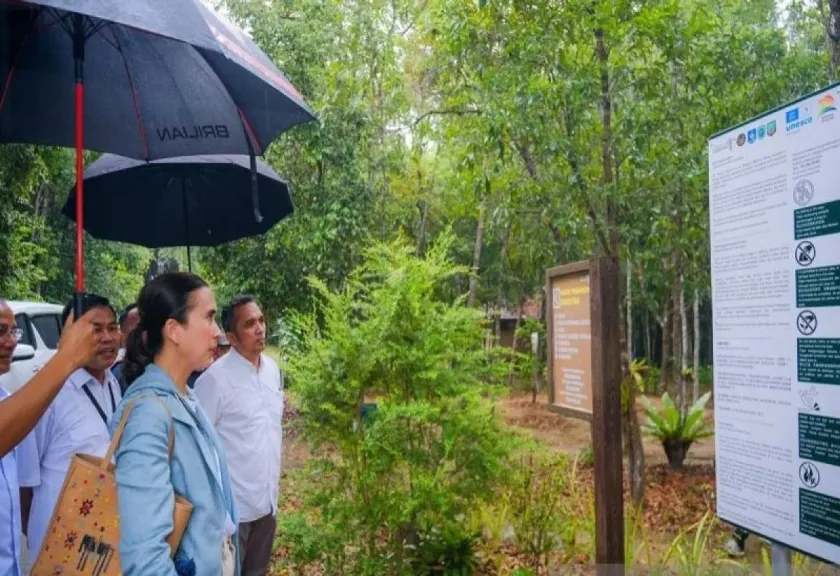
Belitong UNESCO Global Geopark (UGGp) has passed one of the key assessments for protected area management. After receiving a Yellow Card during the 2024 revalidation, this geopark located in the Bangka Belitung Islands was granted Green Card recommendation at the 11th UNESCO Global Geoparks Council Session held in Paris, 2-4 November 2026.
This outcome proves that the evaluation period can be properly utilised to improve area governance. Over the past two years, the Belitong UGGp Management Authority together with local governments implemented a series of measures to follow up on UNESCO's recommendations.
Two core issues were prioritised: the commercialisation of Satam Stone, and compliance standards for Sea Turtle Conservation. Both matters are directly tied to preserving Belitong's geological heritage and biodiversity, which form part of the region's core identity.
READ ALSO
Indonesia's Geological Wealth: 5 Indonesian Geoparks Awarded UNESCO Green Card Status, with Bojonegoro set to follow suit next.
Gen Z Slow Travel: Enjoying Destinations for Longer Periods and Rejecting Overtourism
Indonesia's Geological Wealth: Bojonegoro Has the Opportunity to Become Indonesia's 13th Global Geopark
The Belitung Regency and East Belitung Regency governments issued official circulars prohibiting commercial trade of Satam Stone. Meanwhile, all Sea Turtle Conservation activities have been centralised at Pulau Cina, managed by the Ministry of Marine Affairs and Fisheries.
These efforts received formal appreciation during the revalidation session. One Council member even noted that Belitong sets a worthy best practice example for other geoparks that have previously received Yellow Card status.
From Yellow Card To Successful Recovery
Under UNESCO mechanisms, a Yellow Card is issued when a geopark is assessed to not fully meet all established criteria. Site managers are granted a two-year period to implement required improvements before undergoing the next evaluation process.
When all recommendations are properly addressed and the area once again meets all requirements, the geopark becomes eligible to receive a Green Card. This status allows the site to retain its UNESCO recognition for the next four years.
Belitong was officially designated as a UNESCO Global Geopark on 15 April 2021. This area's main attraction is its geological wealth, including ancient granite rock formations and Satam Stone, a unique geological landmark native to Belitung.
Successfully passing this re-evaluation confirms that global geopark status is not a permanent entitlement.
UNESCO conducts revalidation assessments every four years to review management quality, geological heritage protection, educational activities, and the protected area's contribution to sustainable development.
Geotourism Must Deliver Tangible Benefits
The Ministry of Tourism supported Belitong's governance improvements by hosting a national seminar and geopark management capacity building workshop in September 2025.
Collaborative efforts also included an international conference on sustainable Marine Tourism and community resilience for island geoparks, held in June 2026.
Additional support included installation of 40 educational visitor safety notice boards across three geosites, as well as site promotion via passenger arrival announcements on Citilink flights landing at H.A.S. Hanandjoeddin International Airport.
These initiatives demonstrate that proper geopark management cannot only focus on protecting rock formations or landscapes. Visitor communication, safety protocols, education, and active local community participation are all equally critical components to maintain destination quality.
As of 2026, UNESCO records 241 global geoparks across 51 countries worldwide. Every designated site is required to integrate Conservation, education and sustainable development while centering local community involvement.
For Belitong, successfully regaining Green Card status is only the start of its ongoing responsibilities. The core challenge ahead will be aligning Satam Stone protection, Sea Turtle Conservation and Tourism development, so that this international recognition delivers real, tangible benefits for local communities.









Belum ada komentar. Jadilah yang pertama!