
Visits from Saudi Arabian tourists have increased, destinations outside Bali are starting to attract interest.
Tuesday, 10 November 2026 | 15:00
Author: Arif S

Indonesia's tourism sector is showing a positive growth trend as of September 2026. Amid global uncertainty and geopolitical challenges, international tourist arrivals continue to rise, with Saudi Arabia emerging as the largest source of visitors from the Middle East region.
The Ministry of Tourism recorded that international tourist arrivals to Indonesia reached 12.01 million between January and September 2026. This figure represents a 5.01 percent increase compared to the same period in the previous year.
Tourism Minister Widiyanti Putri Wardhana stated that this growth demonstrates the resilience of the national tourism sector amid various challenges.
READ ALSO
Yogyakarta and Bali are the Ministry of Tourism's flagship locations for promoting Indonesian culinary tourism.
8 Islands in Indonesia for Self Healing, from Belitung to Raja Ampat
Vibrant West Java Events Lineup for September 2026, Featuring Programmes Ranging from Bandung X Beauty up to World Coconut Day.
"Amid global dynamics and domestic challenges, the tourism sector continues to grow, improve in quality, and deliver tangible contributions to the national economy," Widiyanti stated.
Specifically for September 2026, international tourist arrivals stood at 1.43 million, marking a 2.31 percent rise compared to September 2025. This performance was maintained despite the eruption of Mount Anak Krakatau in early September, which temporarily disrupted flight operations at eight airports and affected travel for over 454,000 passengers.
Against this backdrop, tourist market diversification efforts are beginning to show results. Arrivals from the Middle East grew by 2.33 percent, while other Asian markets increased by 9.51 percent. Oceania recorded 7.51 percent growth and Southeast Asia rose by 5.81 percent. Conversely, the European market still contracted by 4.27 percent.
Among Middle East markets, Saudi Arabia is one of the primary contributors. The Ministry of Tourism recorded over 83,000 visitor arrivals from the country between January and July 2026. This figure places Saudi Arabia as Indonesia's largest tourist source market across the Middle East and North Africa region.
This upward trend has also been observed in recent years. Saudi Arabian tourist arrivals were recorded at around 107,000 people in 2023, before rising to over 156,000 people in 2025.
Ni Made Ayu Marthini, Deputy for Marketing at the Ministry of Tourism, noted that the Saudi Arabian market holds significant importance for the development of Indonesia's tourism industry.
"These figures illustrate how vital the Saudi Arabian market is for Indonesia's tourism sector," Ni Made Ayu told Arab News.
According to her, Saudi Arabian tourists have favourable characteristics in terms of economic contribution. They generally stay for longer periods at travel destinations and have relatively high expenditure levels.
These characteristics align with the government's efforts to improve tourism quality. This means that success in this sector is not only measured by arrival numbers, but also by tourist spending value and the impact generated for businesses in destination areas.
Longer lengths of stay create opportunities across various sectors, ranging from hotels, restaurants, shopping centres, transportation, through to local business operators. For this reason, the government is working to expand destination options for Saudi Arabian tourists so that their visits are not concentrated solely in Bali.
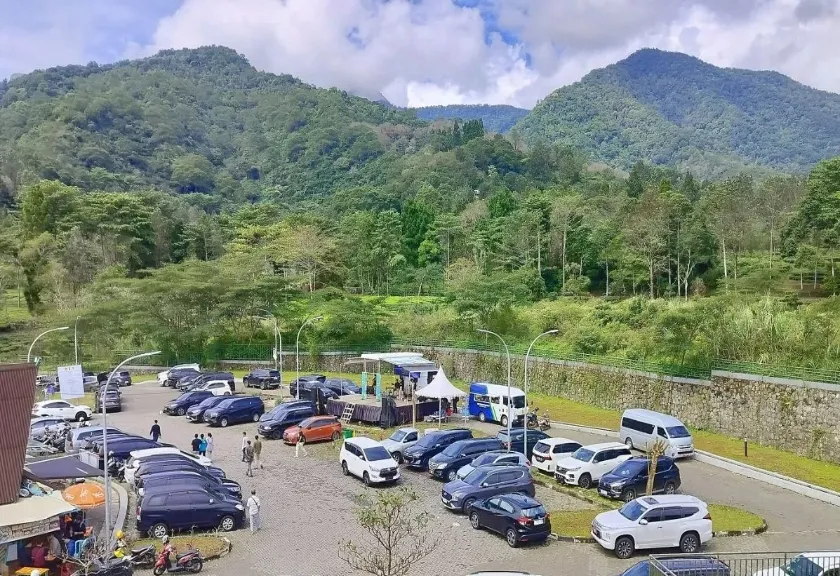
Beyond the Island of the Gods, Puncak and Bandung in West Java are also starting to gain attention. These two areas offer natural scenery, cooler climates in various locations, culinary options, as well as family-friendly tourism activities.
To strengthen Indonesia's appeal in the Saudi Arabian market, the Ministry of Tourism is running the international campaign titled Go Beyond Ordinary. This promotion highlights three priority sectors: gastronomy and culinary tourism, health and wellness tourism, and marine tourism.
The government also aims to introduce destinations outside Bali, including Labuan Bajo in East Nusa Tenggara and the Borobudur Temple in Central Java. Labuan Bajo serves as the gateway to Komodo National Park, while Borobudur offers UNESCO-recognised historical and cultural tourism experiences.
Promotional activities are carried out through various initiatives, including familiarization trips for travel agents, content creators, and influencers from Saudi Arabia.
These participants are invited to experience first-hand Indonesia's destinations and tourism offerings, which they will then showcase to potential tourists in their home country.
These efforts are being implemented amid geopolitical tensions and conflicts in the Middle East. While regional conditions have impacted promotional activities, the government remains committed to maintaining Indonesia's presence in the Saudi Arabian market.
Opportunities from the Saudi Arabian market run parallel to overall improvements in international tourist visit quality. The Average Spending per Arrival (ASPA) for international tourists in the third quarter of 2026 reached 1,374 US Dollars, equivalent to approximately IDR 23.52 million. This value increased by 5.95 percent compared to the same period in the previous year.
Cumulatively, ASPA for January to September 2026 reached 1,336 US Dollars or approximately IDR 22.36 million, marking 6.18 percent growth. This increase confirms that the economic value generated per international tourist arrival is also strengthening.
The domestic market also remains a critical pillar. The Ministry of Tourism recorded 938.84 million Domestic Tourist trips across Indonesia between January and September 2026, an increase of 4.1 percent compared to the same period in 2025. For September alone, this figure reached 96.69 million trips.
Tourist mobility also drove higher occupancy rates for star-rated hotels. In September 2026, hotel occupancy reached 51.78 percent, an increase of 1.62 percentage points compared to September 2025. Cumulatively, hotel room occupancy for January to September stood at 49.81 percent.
The impact of tourism is also visible across the growth of multiple economic sectors. Statistics Indonesia recorded that Indonesia's economy grew by 5.47 percent in the third quarter of 2026. The accommodation & food and beverage business sector grew by 11.22 percent, other services by 8.32 percent, transportation & warehousing by 8.03 percent, and corporate services by 6.77 percent.
The Ministry of Tourism estimates that the tourism sector contributed approximately 4.03 percent to Indonesia's national gross domestic product up to the third quarter of 2026.
With the rising number of Saudi Arabian tourist arrivals and improving national tourism indicators, Indonesia has the opportunity to expand its market reach while distributing economic benefits to more regions across the country.
The challenge lies in converting tourist interest into longer stays, higher spending, and positive experiences that encourage visitors to return to Indonesia.










Belum ada komentar. Jadilah yang pertama!