
Blok M is now on foreign tourists' travel radar, with contemporary culinary offerings serving as its main attraction.

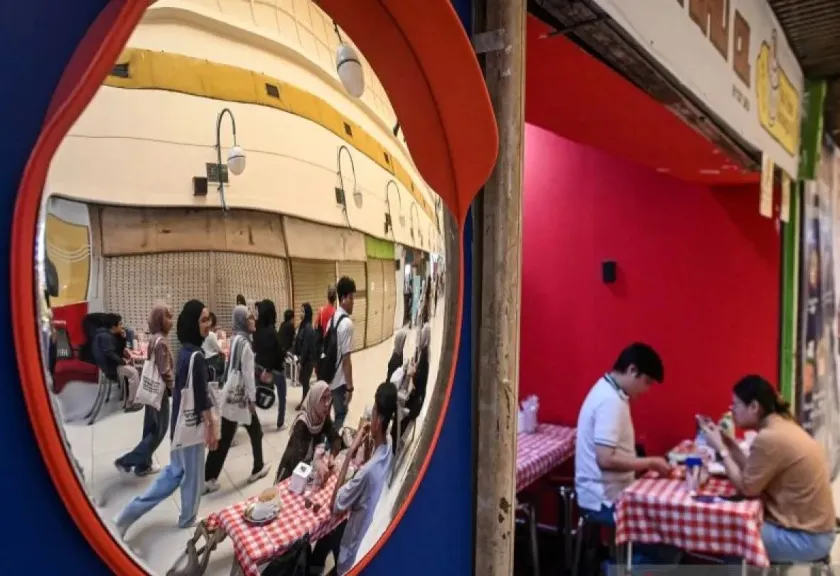
Blok M has long been established as one of the most popular hangout destinations for young people in Jakarta. Recently however, this South Jakarta district has begun attracting attention from international tourists who wish to experience the capital city's food trends and urban lifestyle first-hand.
The Ministry of Tourism views this shift as a positive indicator for Jakarta's tourism development. Blok M is no longer exclusively a local gathering space, and has now entered the list of destinations for foreign travelers visiting Jakarta.
"Blok M is not only well-known among Gen Z, millennials and the general local public—it has also gained recognition overseas," stated Ni Made Ayu Marthini, Deputy for Marketing, during the Wonderful Indonesia Gastronomy press conference held in Jakarta on Tuesday.
READ ALSO
Japan as Inspiration, Indonesia Strengthens Gastronomy and Cultural Tourism Development
Indonesian Cuisine Becomes a Magnet, Foreign Tourists Enjoy Gastronomy Tourism
The 2026 Flower and Fruit Festival serves as momentum for promoting Karo's tourist destinations.
Food exploration is one of the main reasons foreign tourists visit Blok M. The area offers a diverse range of modern dining options, including visually distinctive desserts and traditional Indonesian snacks reimagined with contemporary creative touches.
For visitors, this experience delivers far more than just a meal. Travelers are able to observe how local cuisine adapts to emerging trends, while also gaining insight into an alternate side of Jakarta's urban daily life.
According to Made, Blok M has solidified its standing as a credible culinary tourism destination. She assessed that the district now ranks among the top locations to visit for anyone seeking to follow the latest food trends in Jakarta.
Blok M has benefited greatly from the modern way travelers research trips. Food recommendations spread rapidly across social media platforms, including personal experiences shared by foreign tourists after dining in the area.
Malaysian tourists form one of the largest groups of international visitors to Blok M, and their experiences are subsequently circulated widely across digital platforms.
"Other people will encounter this content through algorithms on Threads, Instagram, TikTok. They will continuously come across these genuine testimonials from Malaysian travelers who have visited Indonesia," she explained.
This phenomenon matches data from Statistics Indonesia (BPS). Records show that 58.34 percent of all tourists visiting Indonesia in 2025 participated in culinary or gastronomy tourism activities.
This figure demonstrates that food has become deeply inseparable from travel. For a growing number of visitors, trying local cuisine is no longer a secondary side activity, but a core reason they select a travel destination.
"This confirms that gastronomy functions as an extremely strong draw, and is a central, meaningful part of the travel experience," stated Made.
The Ministry of Tourism intends to expand this potential by positioning Jakarta as the official gateway to regional culinary destinations across Indonesia.
Through this approach, tourists who have positive gastronomy experiences in Jakarta can be guided to continue their travels to other cities across the country.
Hafiz Agung Rifai, Acting Deputy for Event Organizer Development at the Ministry of Tourism, explained that Jakarta is planned to operate as the central connection point for Indonesia's national gastronomy tourism route.
"We aim to develop Jakarta into a gastronomy hub that will link to other regional culinary destinations including Yogyakarta, Solo and Bali. All locations will be connected within one integrated culinary tourism route, to help drive visitor traffic out to the regions," he stated.
This framework means the culinary experience will not end in Blok M. Tourists can first explore Jakarta's urban food trends, then continue their journeys to discover the rich culinary heritage and traditional food culture found across different parts of Indonesia.
In the long term, the Ministry of Tourism hopes to elevate gastronomy to a central position within Indonesia's national tourism strategy. Rather than remaining just an amenity enjoyed after arriving at a location, local cuisine is intended to become the primary motivation for travelers choosing Indonesia.
"Gastronomy will no longer be just a complement to travel. Instead, it will become the main reason that tourists decide to make Indonesia their travel destination," he concluded.









Belum ada komentar. Jadilah yang pertama!