
Indonesia's Geological Wealth: 5 Indonesian Geoparks Awarded UNESCO Green Card Status, with Bojonegoro set to follow suit next.
Saturday, 7 November 2026 | 13:00
Author: Arif S

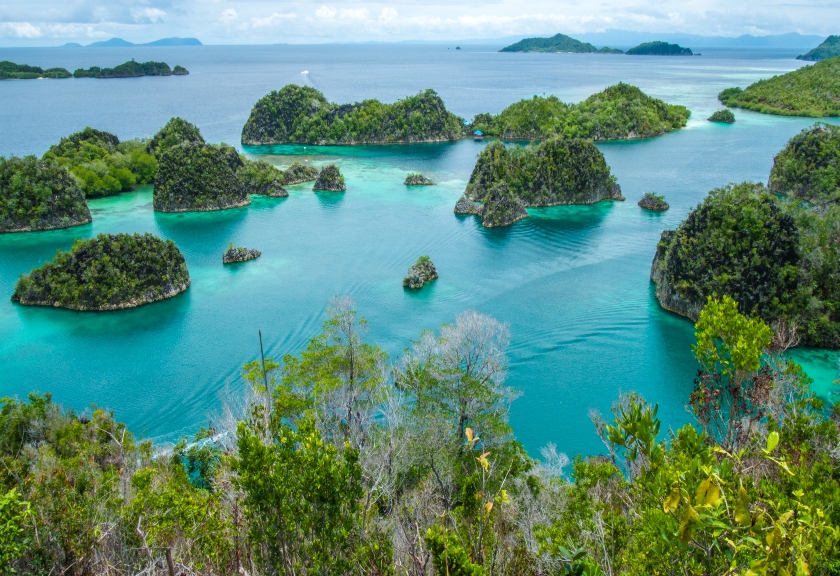
Five Indonesian Geoparks have received welcome news from Paris, France. Belitung, Merangin Jambi, Ijen, Raja Ampat, and Maros-Pangkep successfully passed the UNESCO Global Geoparks (UGGp) revalidation process and received positive recommendations to retain their Green Card status.
This outcome was announced following the 11th Session of the UNESCO Global Geoparks Council held 2–4 November 2026. At the same forum, Bojonegoro Geopark was also recommended for admission as a new member of the UNESCO Global Geoparks network.
This achievement confirms that Indonesia's geological heritage holds a respected place in global natural heritage Conservation efforts. However, this international recognition also carries responsibility: to ensure sustainable management of these sites, and that tangible benefits are delivered to surrounding communities.
READ ALSO
Indonesia's Geological Wealth: The Story of Belitung Recovering from UNESCO's Yellow Card
Indonesia's Geological Wealth: Bojonegoro Has the Opportunity to Become Indonesia's 13th Global Geopark
Budget Travel: Malaysia and Singapore Can Be Suitable Short Vacation Options for Indonesian Gen Z
Minister of Tourism Widiyanti Putri Wardhana welcomed the revalidation results. She reminded that UNESCO recognition should not be treated only as a source of national pride, but must be followed by concrete actions to preserve these sites.
“Global geopark status must be upheld through robust governance, genuine Conservation practices, and active local community participation. We do not only want these geoparks to stand as a source of Indonesia's international pride, but also to deliver economic opportunities and improve living standards for the people living around them,” stated Widiyanti.
Each of the five geoparks has distinct characteristics. Belitung is renowned for its granite rock formations and Satam Stone, Ijen hosts an active crater and famous blue fire phenomenon, while Merangin Jambi preserves ancient geological landscapes and fossil deposits.
In eastern Indonesia, Raja Ampat offers island geological formations paired with exceptional marine biodiversity. Meanwhile Maros-Pangkep is defined by its karst landscapes, prehistoric cave systems, and ancient rock art heritage.
The five geoparks did not all pass through the same review journey. Belitung was required to address specified improvement notes after receiving a Yellow Card during the 2024 revalidation cycle. Merangin Jambi also faced council scrutiny over unregulated gold mining operations near the Muara Karing fossil river site.
Meanwhile Ijen, Raja Ampat, and Maros-Pangkep completed their first revalidation assessment, having been designated UNESCO Global Geoparks in 2023. All three were found to have properly implemented recommendations issued from their original designation review.
Four geoparks: Belitung, Ijen, Maros-Pangkep, and Raja Ampat received unanimous Green Card recommendations. Merangin Jambi secured its recommendation via formal ballot, with seven votes in favour and four against.
Minister of Culture and Chairman of the Indonesian National Commission for UNESCO, Fadli Zon, described the results as international recognition for Indonesia's work to preserve both geological heritage and Indonesian Culture.
“The Green Card recommendations for five of Indonesia's UNESCO Global Geoparks is proud news for the entire nation. This confirms that our efforts to guard Indonesia's geological wealth are being acknowledged and valued on the world stage,” Fadli stated.
Bojonegoro Creates Additional Recognition Opportunity For Indonesia
There was more good news from Paris beyond the five revalidated geoparks. Bojonegoro Geopark was also included among 11 sites recommended by the UNESCO Global Geoparks Council for full global geopark designation.
Bojonegoro hosts 20 geosites, 3 biosites and 8 Cultural Heritage sites. Its flagship locations include Wonocolo Texas, Kayangan Api, Kedung Lantung, Kawengan Anticline, Negeri Atas Angin and the Wonocolo Formation. The Cultural Heritage of the Samin Village community and traditional Wayang Thengul puppetry further strengthen the site's unique value.
Bojonegoro's unique petroleum industry history and tectonic geological structure were highlighted as key assets during assessment. UNESCO also commended the strong community participation and collaborative working between local government and all relevant stakeholders.
It should be noted that this council recommendation is not the final official designation. UNESCO confirmed that all 11 proposed new geoparks, including Bojonegoro, will be forwarded to the UNESCO Executive Board for formal ratification at its spring 2027 session.
Should ratification be granted, this addition will bring Indonesia's total number of UNESCO Global Geoparks from 12 to 13 sites.
Challenges Following Recognition
UNESCO Global Geopark status is not merely a marketing label for Tourism Destinations. This programme is designed to integrate geological heritage protection, public education, sustainable development and local Community Empowerment.
As of 2026, UNESCO registers 241 UNESCO Global Geoparks across 51 countries worldwide. During this November council session, Green Card status was awarded to 60 geoparks following completed revalidation reviews.
All sites granted a Green Card retain their official global geopark status for an additional four year period.
The Minister of Tourism confirmed that the national government will continue to strengthen cooperation between ministries, state agencies, regional governments and site management bodies.
“Our target is to maintain this Green Card status as proof that site management successfully balances conservation, education and Community Empowerment priorities. For this reason, every recommendation issued by UNESCO must be followed up with real action and cross-stakeholder collaboration,” she stated.
For Indonesia, these results from Paris provide a foundation to expand international promotion of Geotourism. However, the true measure of success is not merely the count of recognised geoparks: it is the ability to protect nature, preserve culture, and lift living standards for the communities who call these landscapes home.








Belum ada komentar. Jadilah yang pertama!