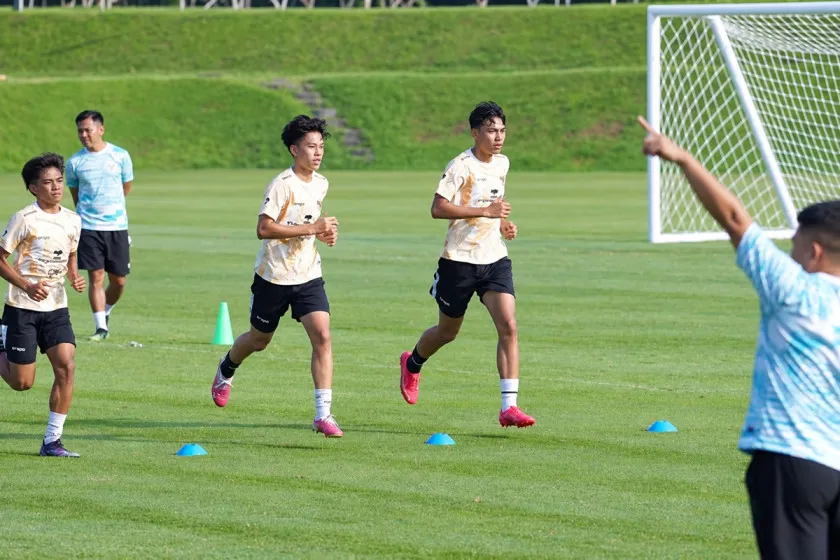

Indonesia U-20 National Team secured their spot in the 2027 AFC U-20 Asian Cup finals after defeating Australia 2-0 in the final Group H match at Lao National Stadium KM16, Laos, Sunday (6/9/2026). Indonesia finished top of the group with seven points, confirming their third consecutive appearance at the tournament finals.
This success serves as vital foundation for Garuda Muda. However, the upcoming challenges will be entirely different.
Having passed the qualification stage, Indonesia will face far stiffer competition at the AFC U-20 Asian Cup finals. For this reason, squad depth has become one of the key aspects that deserves attention.
READ ALSO
Indonesia U-20 National Team Qualifies for 2027 Asian Cup, Nova Arianto's Tactical Formulation Becomes the Main Highlight.
Championship Target: Should John Herdman Completely Overhaul the Indonesia National Team Squad?
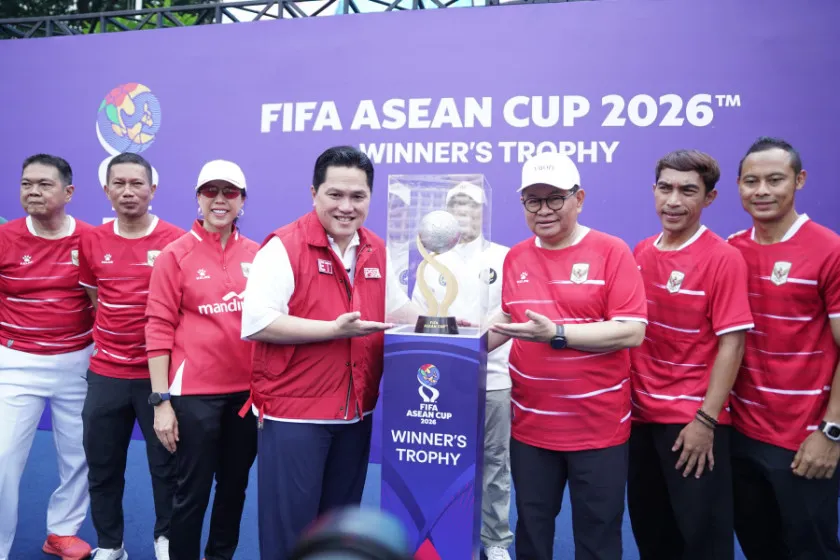
FIFA ASEAN Cup 2026: It's Time for John Herdman to Lead the Indonesian National Football Team to Claim the Championship Title.
Discussions regarding the need to strengthen the squad were part of the conversation on the ITSMe Podcast at Sentul Studio, Bogor. Hosted by Raisha and Gilang Respaty, football analyst Ronny Pangemanan assessed that adding quality players is a viable option to build greater squad depth for Indonesia ahead of the finals.
This perspective does not reduce appreciation for the players who successfully carried Indonesia through qualification. On the contrary, their performance during the qualifiers forms the base to build an even more competitive team.
Stepping Up, Team Requirements Also Shift
Indonesia went undefeated throughout Group H. Following a 0-0 draw with Malaysia and a 3-0 win over Laos, Garuda Muda closed the group stage by beating Australia 2-0 in the decisive final match.
The two goals against Australia were scored by Theodore Evan Leeming in the 28th minute and Amar Rayhan Brkic in the 90+2nd minute. This victory also locked Indonesia's position at the top of the group.
This track record proves that the squad built by Nova Arianto has promising foundations. However, success in qualification does not automatically guarantee results at the final tournament.
This is where the proposal to add squad members becomes relevant. A deeper squad will provide more tactical options when facing opponents with different playing characteristics, while also maintaining consistent performance quality across the full duration of the tournament.
Ronny Pangemanan noted that adding at least five additional players is worth considering to strengthen the squad. This figure is his personal opinion shared during the podcast discussion, and not an official target that has been set by PSSI.
Nova's Team Building As Core Capital
Meanwhile, football observer Sapto Haryo Rajasa stated that Garuda Muda's qualification run exceeded his expectations. He had previously predicted Indonesia would qualify as group runners-up, only for the team to instead finish as Group H winners.
Sapto identified Nova Arianto's ability to build and mould the team as one of the critical success factors. According to him, Nova consistently manages to install a winning identity within every squad he handles, enabling the available players to develop into a cohesive competitive unit.
The victory over Australia has further reinforced this optimism. If the team can defeat one of Asia's strongest sides in a high-stakes deciding match, Indonesia has proven they can hold their own against any opponent at the finals stage.
Nevertheless, this optimism must be paired with proper preparation. Bringing in additional players is not an admission that the current squad has failed, but rather an effort to expand tactical options and increase healthy internal competition within the team.
Garuda Muda have successfully cleared the qualification phase. Next, they will require far more thorough preparation to compete at the real standard of Asian youth football.
The win against Australia has opened new opportunities. The depth of Indonesia's final tournament squad will determine how far this opportunity can be realised.