
Not Just Traditional Fabric, Sumba Weaving Motifs Hold Geometric Intelligence
Sunday, 1 November 2026 | 15:00
Author: Rojes Saragih

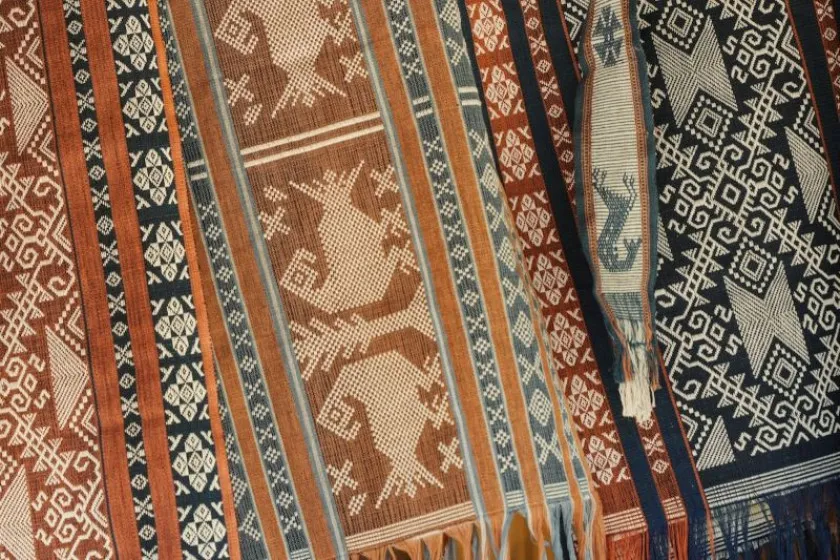
Sumba is renowned for its distinctive landscapes: sprawling savannas, rolling hills, White Sand beaches, and traditional villages that still preserve ancestral traditions. Yet the wealth of this East Nusa Tenggara island extends far beyond its natural scenery and traditional architecture.
There is also Cultural Heritage that holds deep collective knowledge of local life, embodied in Sumba Woven Textiles.
Beneath motifs of horses, roosters, crocodiles, turtles, and various geometric shapes lie the Sumba people's worldview on interpreting nature and maintaining life balance. These woven fabrics are not merely craft products or traditional attire accessories—they form an integral part of local social, cultural, and spiritual identity.
READ ALSO
Blok M is now on foreign tourists' travel radar, with contemporary culinary offerings serving as its main attraction.
Eruption of Mount Anak Krakatau Impacts 33 Flights at Soekarno-Hatta Airport
One particularly revered textile is hinggi, a traditional woven cloth traditionally worn by men. Sumba women meanwhile wear a corresponding traditional cloth known as lau. Both carry distinct motif characteristics and cultural functions deeply tied to community life.
Dual and Triple Patterns: The Hidden Logic Within Hinggi Motifs
The uniqueness of hinggi cloth goes beyond its wide variety of motifs. The visual composition of these textiles follows structured patterns that can be analysed through mathematical and geometric frameworks.
This is explored in the research paper A Study of East Sumba Textile Handwoven Animals “Hinggi” Motifs Ikat in Terms of Dualism and Triple Patterns, as reported by ANTARA on 01 November 2026. Conducted by Erwin Ardianto Halim and fellow researchers, this study was published in 2023 in the Journal of Contemporary Social Sciences and Humanities.
The research examines How fauna motifs on hinggi cloth are structured using two-element dualism patterns and three-element triple patterns. Within a textile's layout, contrasting elements are arranged in balanced pairs, while triple structure configurations create harmonious visual equilibrium.
This approach demonstrates that motif layouts on traditional cloth are never created arbitrarily. There is intentional order, repetition, and interrelation between elements that form a cohesive whole composition.
Within the context of Sumba Culture, this layout also serves as a physical representation of beliefs surrounding balance. Hinggi cloth does not only offer visual beauty—it acts as a medium that communicates the community's understanding of how all elements of life connect.
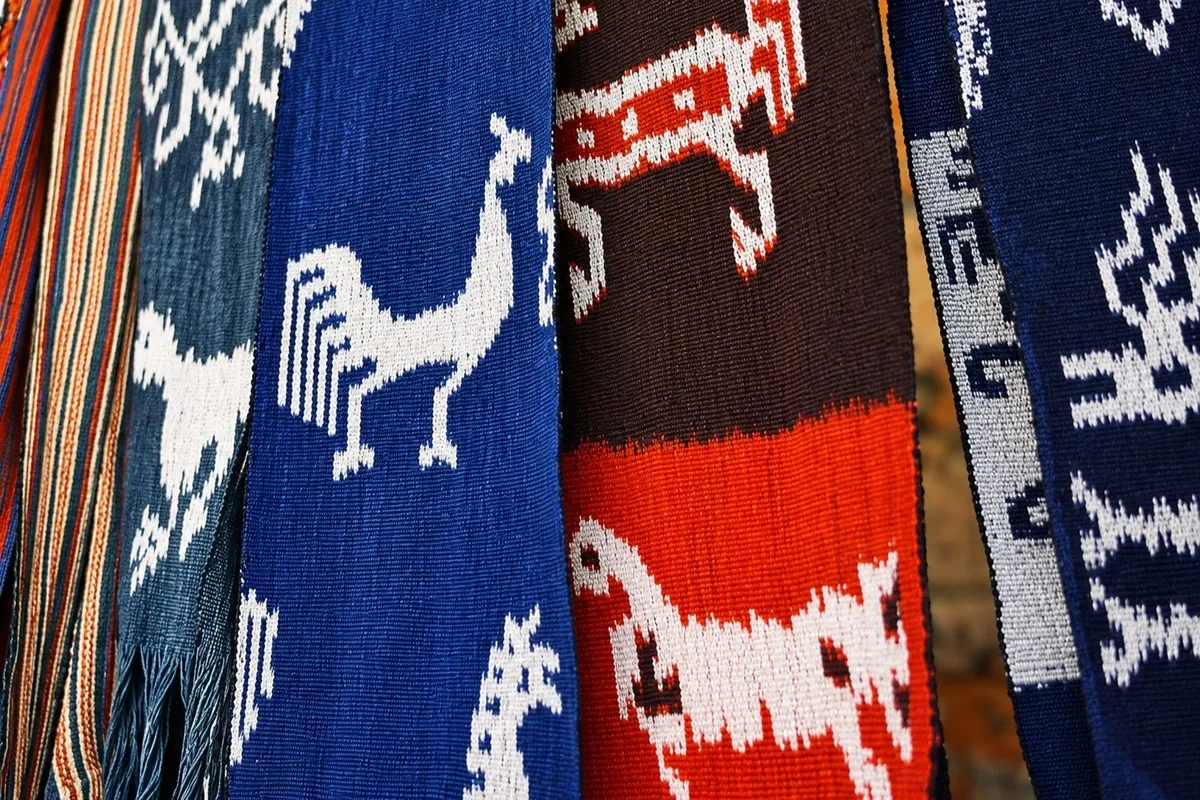
Horses, Deer, and Dragons: Sumba's Visual Language
Fauna motifs are one of the most recognizable hallmarks of Sumba Woven Textiles. Horses, roosters, crocodiles, turtles and other animal figures appear in their signature stylised forms.
In Halim and his team's research, animal motifs on hinggi cloth were analysed for their structural arrangement and formal relationships. Many motifs are designed using mirroring or symmetry principles, where visual elements on one side have a corresponding matching counterpart on the opposite side.
This pattern reflects an inherent understanding of balance and order. Animal forms are rarely depicted realistically; instead they are simplified into line and shape compositions that still retain their recognisable visual identity.
Motif repetition also creates rhythmic flow across the cloth surface. Geometric forms including diamonds, triangles and lines form part of this visual language passed down through generations.
Ethnomathematics: When Tradition Meets Geometry
The ordered structure of Sumba woven motifs can be understood through the framework of Ethnomathematics, the field of study examining the relationship between culture and mathematical practice within community life.
In the context of weaving, geometric principles can be observed in the use of lines, angles, triangles, diamonds, symmetry and pattern repetition. All these elements are incorporated during motif design and layout, even when weavers do not use formal mathematical terminology.
This body of knowledge developed through observation, practice, hands-on experience, and intergenerational learning within weaving families and communities.
This is what makes this tradition so remarkable. This skill for arranging patterns did not originate from classroom formulas or academic theory. Within weaving culture, understanding of measurement, shape, repetition and balance developed organically through long years of lived practice.
In this way, these woven textiles stand as proof that mathematical knowledge also emerges and evolves within everyday cultural life.
Exploring Sumba Through Cultural Tourism Experiences
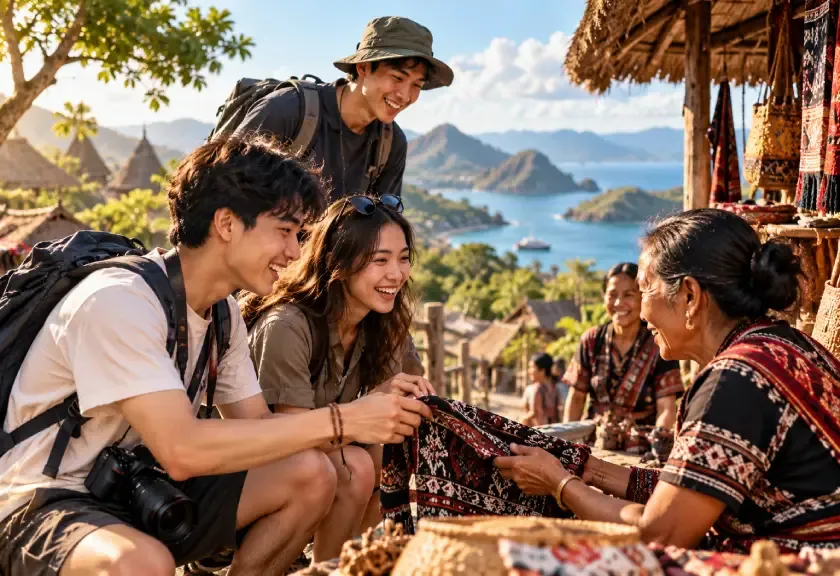
For visitors, learning about Sumba weaving makes for a deeply rewarding addition to any trip around the island. After visiting Walakiri Beach, the savannas of Wairinding Hill, or traditional village settlements, travellers can gain intimate insight into the traditional cloth making process and the stories behind each motif.
One area famous for its weaving heritage is Kaliuda Village in East Sumba. This location is one of the best places to observe weavers at work and learn about the traditional ikat cloth production process.
Visiting a weaving workshop allows travellers to appreciate that every piece of cloth requires extraordinary skill, patience and specialised knowledge. Every step—from preparing yarn, tying pattern resist lines, through to the natural dyeing and weaving processes itself—represents inherited craft expertise.
This form of Cultural Tourism also creates space for meaningful interaction with local communities. Rather than simply purchasing handicrafts as souvenirs, visitors gain an understanding of the values, stories and knowledge embedded within each textile.
Preserving the Ancestral Intellectual Heritage
Sumba weaving demonstrates that Cultural Heritage holds not just beauty, but deep accumulated knowledge. The geometric patterns, repeating forms and symmetrical layouts found in hinggi cloth illustrate how traditional societies developed their understanding of order and balance through cultural practice.
Amidst the growth of modern Tourism, the experience of learning about these textiles offers a way to understand Sumba beyond surface impressions. This island is not just a destination with stunning natural landscapes—it is a living space for enduring tradition and intergenerationally passed knowledge.
Ultimately, a single piece of woven cloth is far more than just handcrafted work. Woven into every thread are stories of nature, life, identity, and the cultural intelligence of the Sumba people—something that deserves to be known, honoured and protected for all generations.








Belum ada komentar. Jadilah yang pertama!