
The Women's Club World Cup will be held in 2028, with each participating club receiving 2.5 million US dollars.
Friday, 23 October 2026 | 13:54
Author: Arif S

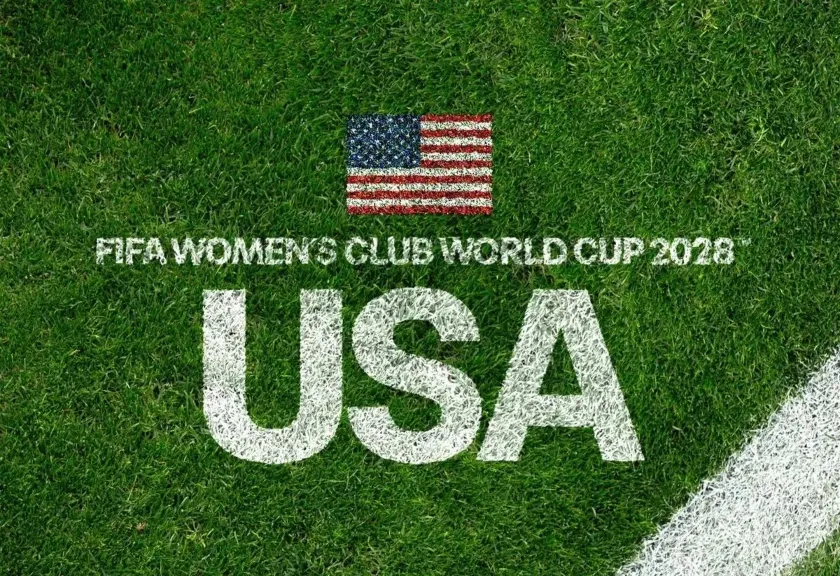
The United States has been appointed by FIFA as host for the inaugural edition of the FIFA Women's Club World Cup 2028, scheduled to run from 5 to 30 January 2028. Alongside confirming the tournament host, FIFA also announced financial support packages for participating nations.
Every member association taking part in the tournament will receive USD 2.5 million in preparation funding. This allocation is scheduled to be disbursed before December 2026.
This amount matches the preparation funding provided to participants of this year's men's World Cup. This policy forms part of FIFA's wider efforts to support women's national team preparations ahead of this major International Football tournament.
READ ALSO
Touching Message from Lionel Messi Ahead of His Final Match with the Argentina National Team
Lionel Messi Retires, Atletico Madrid Defender Becomes Argentina's New Captain
Lionel Messi's Final Match with the Argentina National Team in Buenos Aires
Hosting the tournament in the United States marks an important milestone for the development of Women's Football at club level. However, the decision to hold the event in January risks creating significant calendar conflicts, particularly for European clubs who will still be mid-way through their domestic league seasons at that time.
FIFA Head of Women's Football Dame Sarai Bareman stated the United States holds multiple qualifying advantages that made it a suitable host for this Inaugural Tournament. Prior experience delivering international sporting events, strong domestic public interest in women's football, and existing high-grade sports infrastructure were listed as FIFA's core deciding factors.
"The United States' proven track record of hosting major FIFA tournaments, combined with the enormous local enthusiasm for women's football and world-class sporting infrastructure, made this nation the clear standout candidate," stated FIFA Head of Women's Football Dame Sarai Bareman, as quoted by The Athletic on Friday.
FIFA formally approved the establishment of the Women's Club World Cup during its official Congress in December 2025. The tournament was originally targeted for 2026, but was pushed back to 2028 to grant all stakeholders sufficient time to prepare the competition properly.
While host nation and tournament dates have now been finalised, FIFA is yet to publish the official list of match venues.
Arsenal and Barcelona Confirmed As Qualified Participants
A number of clubs have already secured their place at the 2028 Women's Club World Cup after winning their respective continental competitions over the previous two seasons.
Seven clubs have confirmed qualification so far: Arsenal and Barcelona from Europe, Gotham FC (United States), Corinthians (Brazil), Wuhan Jiangda WFC (China), Club America (Mexico) and Naegohyang (North Korea).
These sides will be joined by additional qualifying clubs in a tournament designed to bring together the elite of women's club football from every global region. Participation from clubs operating in vastly different competitive systems is expected to provide a clear benchmark for the current standard and growth of women's club football worldwide.
"These seven clubs, alongside the twelve other qualifying sides, will come together to showcase the full strength and depth of women's club football to a global audience," stated Bareman.
FIFA has confirmed the full competition structure will involve 19 total clubs: 13 teams receive automatic qualification, while 6 remaining clubs will compete in playoffs for the final 3 available spots. This will form a 16-team field for the main tournament group and knockout phase.
Europe Allocated Six Qualification Slots
Under the regional quota system, European confederation UEFA received the largest allocation with six places, including the already qualified Arsenal and Barcelona. The Asian (AFC), African (CAF), North and Central American (Concacaf) and South American (CONMEBOL) confederations were each granted three qualification slots.
Oceanian confederation OFC received one allocation place. This distribution model ensures clubs from all world regions are given the opportunity to compete on the global stage.
All remaining qualification places will be awarded based on results from ongoing continental competitions. Should any slots remain unclaimed following this process, FIFA will use the official women's club world rankings to fill the remaining positions.
UEFA has also implemented a rule capping qualification to a maximum of two clubs from any single national association. This rule only allows exception in cases where more than two clubs from the same association have won continental titles within the official qualifying window.
This system is designed to ensure balanced geographical representation while also rewarding competitive performance in regional leagues. With multiple qualification places still undecided, the race to reach this historic tournament will continue until all qualifying fixtures are completed.
January Scheduling Draws Criticism
While this tournament represents a historic breakthrough for women's football, the decision to hold the event in January 2028 has not received universal support. This schedule falls directly during the active mid-season period for almost all top European domestic leagues.
England's Women's Super League (WSL) is among the governing bodies that have raised formal objections. Earlier this year, a WSL spokesperson warned that staging the tournament during this window risks causing severe disruption to domestic league operations.
The WSL also confirmed it was not included in any consultation process by FIFA before the tournament dates were finalised. This calendar conflict presents major operational challenges, as participating clubs will be forced to rearrange domestic fixtures, travel logistics and player preparation schedules mid-competition.
The appointment of the United States as World Cup Host for the 2028 Women's Club World Cup opens a new era for elite women's club football.
However, the success of this inaugural tournament will not only be judged on the quality of matches on the pitch, but also on FIFA's ability to resolve scheduling frictions and ensure all stakeholders can participate fully.





Belum ada komentar. Jadilah yang pertama!