
World Mini Golf Day: From a Casual Leisure Game to Becoming a Competitive Sport
Monday, 21 September 2026 | 15:00
Author: Respaty Gilang

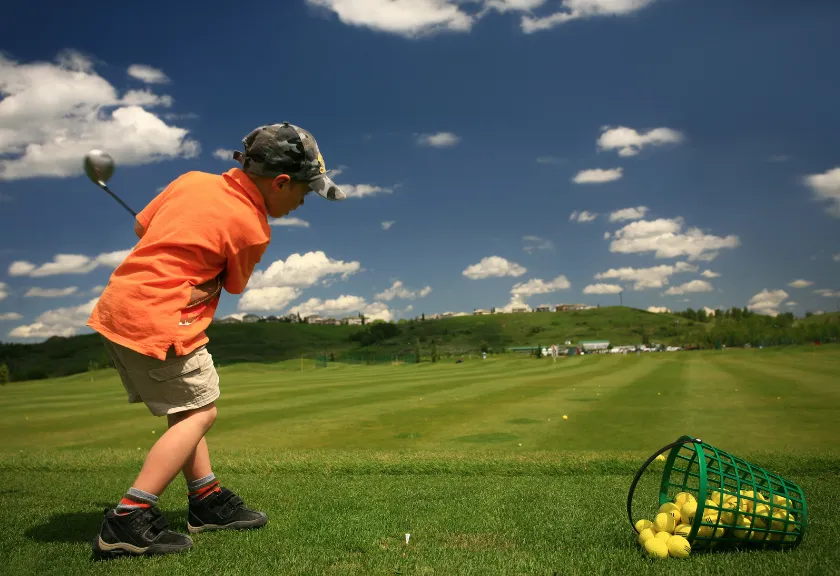
Mini golf is not just a casual pastime to fill free time. Behind its short courses and unique obstacles, this sport carries a long history that grew to become an official discipline with global-level competitive tournaments.
Every 21 September, with the upcoming 2026 commemoration, communities across countries worldwide celebrate World Mini Golf Day. This occasion provides a chance to learn deeper about this game that relies on putting precision, focus, and the ability to guide the ball through varied obstacles.
Unlike conventional golf which requires vast open course land, mini golf uses compact, short courses with highly varied designs. Players aim to sink the ball into the hole using the fewest possible strokes.
READ ALSO
New PGA Tour Format Starting 2028: Performance Will Be the Determining Factor for Tier Promotion and Relegation
World Elite Golfers Gather for Jakic 2025, Anthony Kim's Comeback Steals Spotlight
Experience Royal Living: Own a Villa on the Golf Course
Courses are intentionally designed to be engaging. Players will face obstacles including windmills, looping curved paths, and countless other creative custom barriers.
From Ancient Origins To Modern Mini Golf
Games with connections to golf have existed for many centuries.
Historical records trace the roots of golf back to the Roman Empire. At that time, Roman society played Paganica: a game using curved wooden sticks to strike stuffed leather balls.
This ancient game is recognised as a direct predecessor to the development of modern golf.
The first written documentation of golf itself originates from 15th century Scotland. During the rule of King James II, golf was temporarily banned as authorities deemed it was disrupting mandatory military archery training.
This ban was eventually lifted after King James IV himself became an enthusiastic golf player.
Formal golf rules continued evolving through the 18th century. A critical milestone occurred in March 1744, when the first standardised rulebook was drafted for the Company of Gentlemen Golfers.
Mini Golf Began Developing In The 20th Century
By the early 1900s, the concept of mini golf began to take form. The first purpose-built courses with geometric layouts and artificial construction materials were introduced.
One foundational milestone occurred in 1916, when "Thistle Dhu" became the first mass-produced mini golf course kit sold publicly.
A breakthrough came in 1922, when golf enthusiast Thomas McCullough Fairbairn invented synthetic putting green turf that was perfectly suited for mini golf play.
This invention drastically simplified course construction, and opened access to the game for far wider sections of the public.
Mini golf exploded in popularity across the United States shortly after. By the late 1920s, New York City alone hosted over 150 rooftop mini golf courses, with tens of thousands more operating across the rest of the country.
This trend soon spread to Europe. In 1926, Fr. Schröder constructed one of the first properly documented mini golf courses on mainland Europe.
Four years later, formal competitive tournaments launched. The first major national mini golf championship in the United States, the National Tom Thumb Open, was held in 1930.
From Family Entertainment To Competitive Sport
Over time mini golf developed into two distinct branches: courses built purely for casual family recreation, and purpose-built standardised facilities for official competitive matches.
Design variation remains one of the sport's defining traits. Some courses are kept simple and accessible, while others feature complex obstacles that demand careful strategy and exact putting control.
Mini golf is also commonly referred to as mini-putt or putt-putt in different regions.
Early courses used simple everyday items including car tyres and metal drums as obstacles. Modern course design has become highly creative, with popular concepts such as glow-in-the-dark courses that deliver entirely unique play experiences.
At the competitive sporting level, mini golf now has established national and world championships, and is governed globally by the World Minigolf Sport Federation (WMF).
Beyond Leisure: The Physical Health Benefits Of Mini Golf
Despite its reputation as a relaxed casual activity, mini golf still engages full body coordination and physical movement.
The game actively trains hand-eye coordination and fine motor skills for both children and adults.
During every round, players must calculate ball trajectory, adjust stroke force, read course terrain, and adapt strategy in response to obstacles.
A full round of mini golf provides equivalent exercise to one hour of brisk walking, burning up to 300 calories per session. This level of activity classifies mini golf as light cardio exercise.
Naturally, actual exertion levels will vary based on game duration, course layout, and individual player movement habits.
Ways To Celebrate World Mini Golf Day
World Mini Golf Day provides the perfect excuse to experience this sport together with family or friends.
The simplest way to take part is visiting your nearest mini golf course to play a full round. For new players, the straightforward rules mean this sport can be picked up very quickly after only basic practice.
Beyond playing directly, people can mark the day by learning about different course designs, practicing fundamental putting techniques, or watching mini golf competitions either in person or via online streaming.
At its core, mini golf balances the best elements of sport, play, strategy and entertainment.
From simple backyard pastime to elite world championship competition, mini golf has evolved far beyond just a way to fill free time. Every single putt demands full concentration, and every course brings its own unique set of challenges.








Belum ada komentar. Jadilah yang pertama!