
These countries are offering relocation programs, with provided incentives reaching up to IDR 1.4 billion.
Wednesday, 30 September 2026 | 15:30
Author: Arif S

Living abroad is commonly associated with high costs. However, this is not the case in several countries, where local governments or authorities actually provide financial incentives for people willing to relocate and settle in their regions.
Such programs have emerged amid issues of declining population, labor shortages, and large numbers of abandoned old homes. The forms of assistance vary, ranging from grants worth tens of thousands of euros to monthly allowances.
While it sounds appealing, these programs are not simply cash offers for relocation. Prospective recipients must meet a number of requirements, including age limits, residency status, residential location, property ownership, and even obligations to carry out home renovations.
Below are six regions across six countries Running relocation incentive programs, as reported by Business Insider:
1. Albinen, Switzerland
The small village of Albinen is located in the Swiss Alps. This village is facing an aging population crisis, after large numbers of young people and families chose to leave the area.
To attract new residents, Albinen offers an incentive of 25,000 Swiss francs, or approximately IDR 540 million, for each adult. Children are also included in the program, with assistance of 10,000 Swiss francs, around IDR 216 million per child.
This program was first implemented in 2017, when Albinen's population dropped below 300 people.
However, the incentive is not provided unconditionally. This scheme is intended for individuals willing to reside permanently in the village and fulfil all applicable terms before receiving the assistance.
2. Antikythera, Greece
Antikythera Island in Greece faces a different challenge. Situated between Crete and the Greek mainland, this island once had its population fall to just around 24 residents.
In 2019, local officials launched a program to attract new families. Families with at least three children receive an allowance of 500 euros, approximately IDR 10 million per month, for a maximum period of three years.
Aside from cash payments, recipient families will also receive free accommodation and food if they agree to relocate permanently to the island.
This program is one of the efforts to revive communities on this small island, after many young people left in search of better economic opportunities.
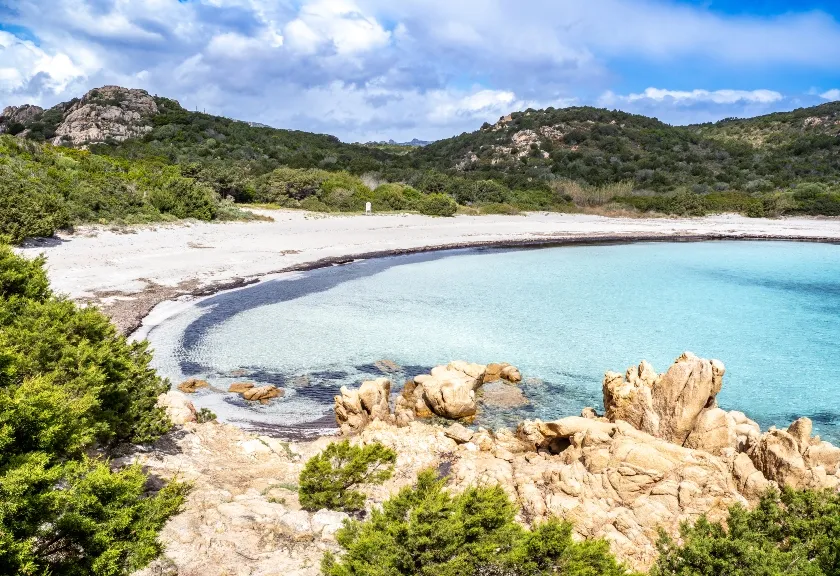
3. Sardinia, Italy
Sardinia offers a different approach. This Mediterranean island has a population of nearly 1.6 million people, yet the government still works to encourage settlement in low-density areas across the island.
One of its programs offers assistance up to 15,000 euros, approximately IDR 306 million, for individuals willing to relocate to Sardinia.
The funds are designated to support relocation to areas with smaller populations. The government expects this program will help address population decline as well as the issue of social isolation in certain parts of the island.
4. Ireland
Ireland operates a dedicated program for people wishing to live on small offshore islands outside the mainland. Launched in 2023, this program offers assistance up to 70,000 euros, approximately IDR 1.4 billion.
As a requirement, recipients must purchase an older home on one of the target islands, and use the grant funds to renovate the property.
Eligible homes must have been constructed before 1993 and meet the criteria under the Croí Cónaithe Vacant Property Refurbishment Grant scheme.
According to Ireland's Department of Rural and Community Development and the Gaeltacht, there are 30 islands with no fixed bridge or road connection to the mainland.
5. Japan
Japan faces demographic challenges and extreme population concentration in metropolitan areas. To encourage relocation to rural regions, the government launched the regional relocation grant program in 2019.
Through the Regional Revitalization Migration Support Grant, households can receive assistance up to 1 million yen, approximately IDR 113 million.
Meanwhile, individuals relocating to rural areas outside the Tokyo metropolitan region are eligible for up to 600,000 yen, around IDR 68 million.
While foreign nationals are permitted to purchase property in rural Japan, foreign applicants must hold permanent resident status, long-term resident status, or special permanent resident status to qualify for the grant.
6. La Rioja, Spain
La Rioja, Spain runs the Revive Program to attract young residents to municipalities with small populations. This program targets people under 45 years old who are willing to relocate to municipalities with fewer than 5,000 inhabitants.
The amount of assistance depends on the population size of the destination area. Municipalities with 2,001 to 5,000 residents offer a 20,000 euro grant, approximately IDR 408 million.
For areas with 501 to 2,000 residents, the assistance reaches 30,000 euros, around IDR 612 million. Meanwhile, municipalities with less than 500 inhabitants may offer grants up to 40,000 euros, approximately IDR 817 million.
The funds must be used to purchase or renovate residential property.
This Is Not Just Paying People To Relocate
All these programs serve broader purposes beyond simply increasing population numbers. Local and national governments use them as tools to revive communities struggling with demographic and economic problems.
One core issue is population decline. Outmigration from small towns to urban centers has left many regions stripped of their working-age population.
Another pressing problem is the shortage of skilled and educated workers. By offering incentives for new arrivals, governments aim to attract new talent, strengthen local economies, improve basic public services, and create opportunities for business growth.
There is also the issue of abandoned structures. As populations fall, historic homes and buildings in many small towns are at risk of falling into disrepair. Relocation programs paired with renovation requirements serve as a method to restore and reactivate these properties.
For anyone interested in joining such programs, the size of the subsidy is not the only factor that should be considered.
Location, Lifestyle, employment opportunities, residency requirements, mandatory minimum stay periods, and fund usage rules must all be reviewed carefully before making a decision.
Each program has different eligibility terms, and provisions may be updated according to local government policies. For this reason, prospective applicants should always verify the latest official program regulations before submitting an application.










Belum ada komentar. Jadilah yang pertama!