
West Java Prepares 4 Sports Areas to Become Sport Tourism and Wellness Destinations
Monday, 21 September 2026 | 17:00
Author: Respaty Gilang

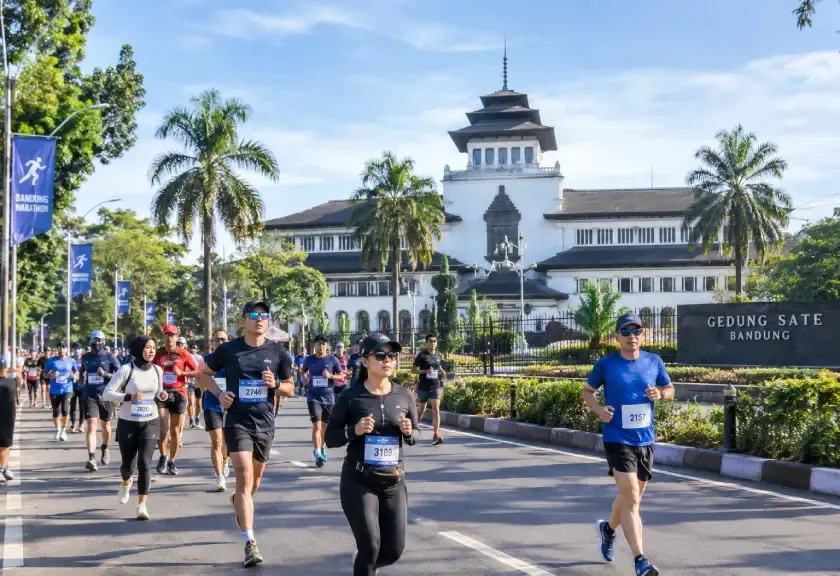
Imagine a trip that is not only filled with sightseeing and culinary exploration, but also sports activities, relaxation, wellness experiences, and full hospitality facilities all within one integrated area.
This concept is currently gaining traction in West Java. Four sports zones across the province have been identified with strong potential to be developed into connected sport tourism destinations, integrated with the broader tourism and creative economy sectors.
The four zones under review are the West Java Arcamanik Sports Complex, Tanjungsari Site, Lodaya Sports Facility, and Padjadjaran Sports Facility.
READ ALSO
The Kemayoran Padel Tournament is a Strategy for Developing Sports Tourism Potential in Central Jakarta
Sport Tourism as the New Engine for Regional Economic Growth
Ramadan Trip: 5 Aesthetic Mosques in West Java for Religious Tourism Spots
With optimal development, these sports areas will no longer only be used during matches or official sporting events. This infrastructure can instead become part of year-round tourism experiences accessible to all visitors.
When Sports Meet Travel Experiences
The growth of sport tourism has redefined travel: trips are no longer limited only to visiting tourist attractions. Today, sporting activities themselves can be the primary reason someone travels to a destination.
This is exactly the framework being developed around these four sports assets in West Java.
Erastus Radjimin, Founder & CEO of Artotel Group, has expressed full support for transforming these four West Java sports zones into integrated sport tourism and wellness destinations.
This support was delivered during the Business Infrastructure Forum (BIF), one of the official side programmes of Indonesia Sports Summit (ISS) 2026 hosted by the Ministry of Youth and Sports of the Republic of Indonesia.
This forum brought together government representatives, investors, industry operators, infrastructure managers, and relevant stakeholders to discuss investment opportunities and sustainable utilisation of public sports infrastructure.
For the tourism sector, these discussions hold significant promise, as sports facilities can be expanded to form far broader interconnected ecosystems.
"We firmly believe that sport tourism and wellness will define the future of hospitality. For this reason, we fully back the development of all four West Java sports assets into high-value, year-round sport tourism and wellness destinations," stated Erastus Radjimin, Founder & Chief Executive Officer of Artotel Group.
Four Zones With Distinct Potential
During this year's BIF, West Java Governor Dedi Mulyadi and Bandung Mayor Muhammad Farhan presented the development potential of each of the four sports assets.
Every location carries its own unique characteristics and opportunities: the West Java Arcamanik Sports Complex, Tanjungsari Site, Lodaya Sports Facility, and Padjadjaran Sports Facility.
Developing these zones will require cross-party collaboration. Both government and private sectors are expected to work together to improve asset utilisation while establishing consistent ongoing activities at each location.
For visitors, this concept will deliver far more varied travel experiences. Within one single area, travellers will be able to exercise, rest, explore local food, enjoy entertainment, and join wellness activities.
As a result, the appeal of these zones will no longer rely exclusively on scheduled matches or specific sporting competitions.
More Than Just Fields And Venues
One of the core challenges in converting sports zones into tourist destinations is ensuring facilities remain active outside official event schedules.
This is why integration with the hospitality and creative economy sectors is a critical component of this proposed development model.
These sports zones must be connected with supporting tourism sectors including hospitality, retail, F&B, wellness, entertainment, and local community spaces. "This integration will create opportunities for far more consistent utilisation of sports infrastructure, while also opening entirely new revenue streams," he explained.
This framework also enables a wide range of supporting activities. For example, sports zones can be developed with on-site accommodation, restaurants, community hubs, gyms, recreational areas, alongside regular scheduled sports and entertainment programmes.
For travellers, this kind of integrated ecosystem makes a location far more compelling as a travel destination, as visitors are not limited to just one type of experience during their stay.
New Opportunities For West Java Sport Tourism
West Java already possesses a unique combination of established tourist destinations, urban centres, active sports communities, and thriving creative industries that will act as a strong foundation for sport tourism development.
If these four sports zones are successfully integrated with the tourism sector, this model has the potential to create an entirely new travel pattern.
Visitors may travel to these destinations to join sports programmes, attend events, use wellness facilities, or simply spend quality time with family and community groups.
At the same time, year-round activity at these sites will create opportunities for local businesses to participate through the culinary, retail, hospitality, travel services, and creative economy sectors.
Artotel Group's participation in Indonesia Sports Summit 2026 represents the company's concrete commitment to supporting Indonesia's economic growth. Leveraging its deep experience in the hospitality industry, Artotel Group is ready to support the development of sports infrastructure integrated with tourism activities, to create sustainable economic value for all stakeholders.
If this concept is fully realised, sports zones across West Java will undergo a fundamental shift in function: from spaces that only host sporting events, into integrated public spaces that bring together sport, travel, wellness, hospitality, food culture, and modern lifestyle.
For travellers, this development is worth watching closely: sport tourism offers an entirely new way to experience a destination—not just by observing a place, but by actively participating and immersing yourself in the activities that bring it to life.



Belum ada komentar. Jadilah yang pertama!